
Starting a new business is exciting, but success depends on more than just a great idea. Behind every thriving company is a solid legal foundation. Legal compliance is the act of adhering to laws and regulations relevant to your industry and location. For startups, prioritizing compliance from day one is not optional—it's essential for survival and growth.
The primary reason for legal compliance is protection. Non-compliance results in lawsuits, fines, and penalties that can be financially crippling for a new company. By understanding and adhering to legal requirements, startups minimize legal disputes and focus on growth without financial distractions.
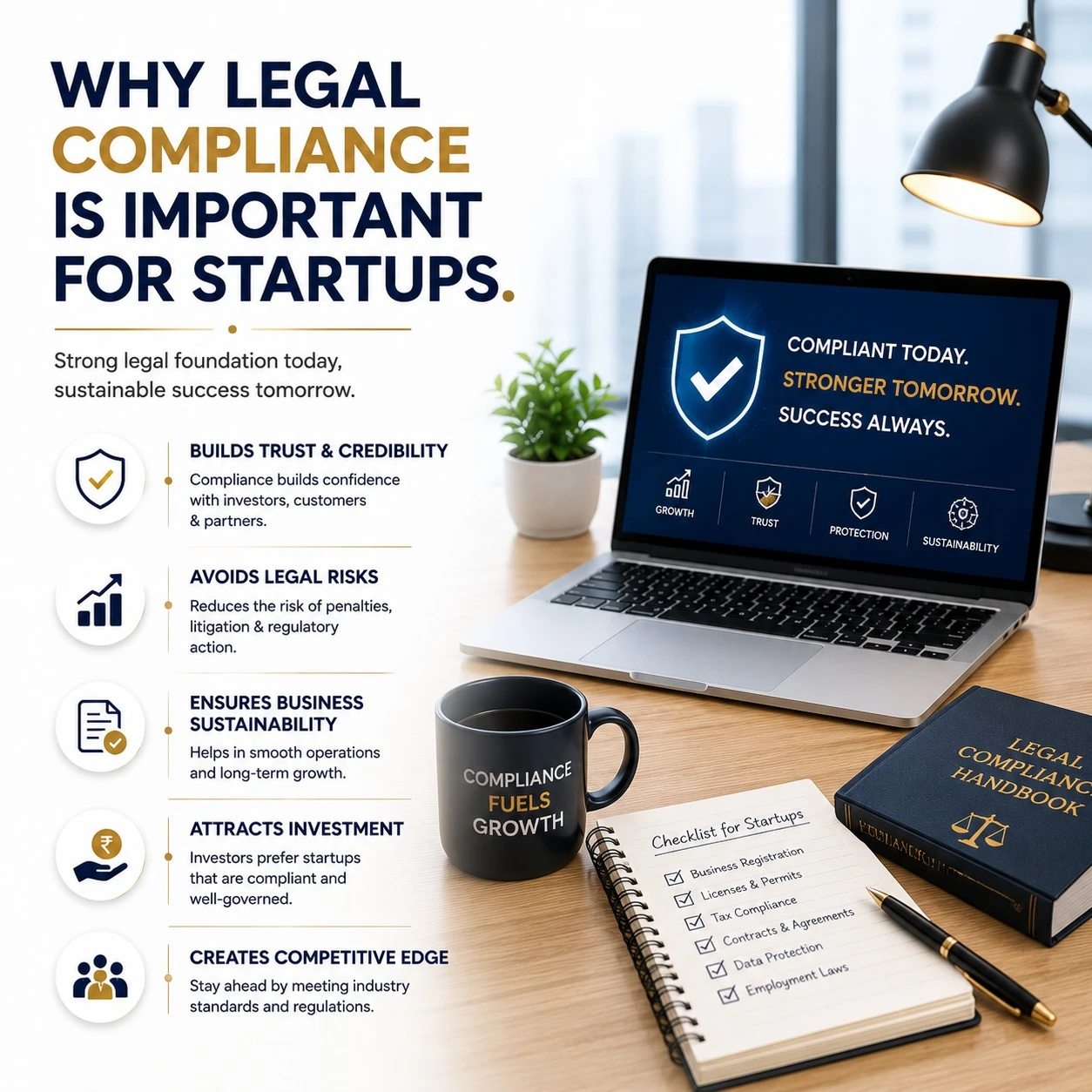
Proper legal compliance protects startups from risks, builds investor trust, ensures smooth operations, and creates a strong foundation for sustainable growth.
Legal compliance builds trust with customers, investors, and employees. Customers engage more with businesses they believe operate ethically and legally. Investors want to ensure their investments are protected by a company that prioritizes compliance. Compliance places your startup above competitors in a competitive market.
Compliance ensures your startup operates smoothly without interruptions caused by regulatory issues. Non-compliance can lead to business halts, audits, and even closure. Adhering to regulations prevents costly violations that disrupt operations and harm profitability.
Intellectual property is key in business. Legal compliance ensures your innovations, brand name, and designs are protected through patents, trademarks, and copyrights. Without legal protection, competitors can copy your work, and you may not have recourse. Many startups lose out because they don't secure IP protection in time.
Staying compliant with financial and tax regulations avoids audits, penalties, and additional fines. Good financial behavior instills trust with banks, investors, and stakeholders. Proper tax compliance includes GST, income tax, and professional tax filings.
As you grow, you'll hire employees and work with vendors. Without proper legal agreements and compliance with labor laws, disputes, lawsuits, or regulatory fines can arise. Compliance ensures fairness, safety, and justice in the workplace, attracting better talent.
Compliance unlocks opportunities like investments, partnerships, and access to new markets. Investors fund legally sound businesses, not just great ideas. A well-structured legal framework builds credibility, making it easier to raise capital and expand.
Meeting legal obligations allows you to showcase compliance on marketing materials, websites, and social media, enhancing public relations. A damaged reputation from non-compliance can take years to rebuild and decline business growth.
Business Registration: Register your company (LLP, Private Limited, Partnership, etc.)
Tax Compliance: GST, income tax, professional tax filings
Intellectual Property: Trademarks, patents, copyright registration
Employment Laws: Labor compliance, employee contracts, PF/ESI
Data Protection: GDPR/privacy policy compliance
Industry-Specific Licenses: FSSAI for food, ISO for manufacturing, etc.
Contracts: Vendor agreements, customer contracts, partnership deeds
Delaying business registration
Ignoring tax filing deadlines
Not securing IP protection early
Using outdated or informal contracts
Skipping employee compliance (PF, ESI, labor laws)
Not monitoring regulatory changes
Treating compliance as a secondary priority
Save time, money, and stress later
Position startup for smooth growth and expansion
Build a strong legal foundation
Avoid penalties and reputational damage
Increase investor confidence
Streamline operations efficiently
Promote transparency and accountability
Legal compliance isn't just a box to check—it's a foundation for long-term success. Prioritizing it from the beginning can save you time, money, and stress while positioning your startup for smooth growth. Startups that comply build trust, avoid penalties, and ensure sustainability. It gives a solid starting point for future success.
Don't ignore compliance while chasing growth. Build your business the right way from the start.

IntroductionIncome tax planning is not just about reducing your tax burden—it's a strategic app...
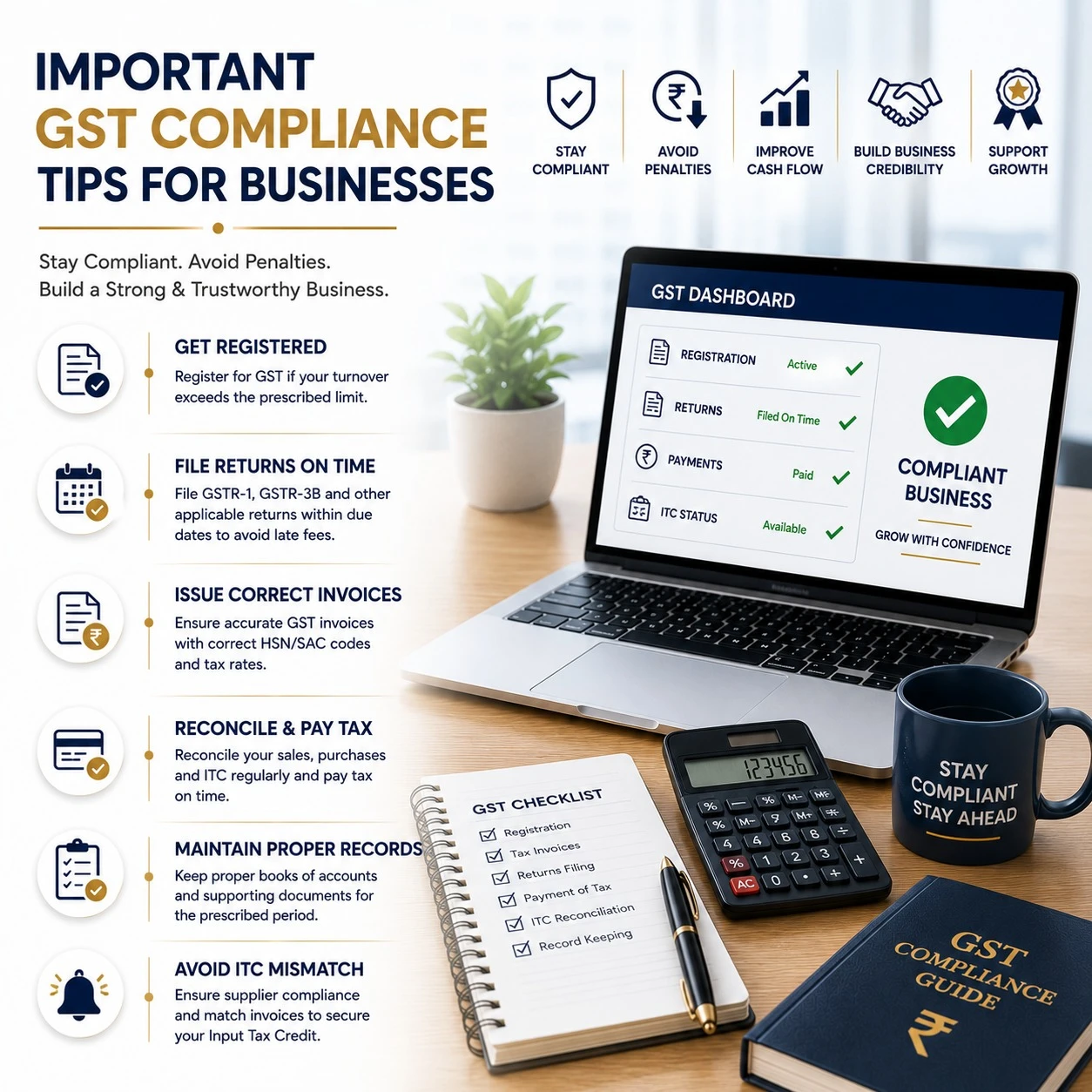
IntroductionGST compliance is essential for every registered business in India. Failure to follow GS...
Get professional assistance for GST, Income Tax, registrations, compliance, and legal matters today.